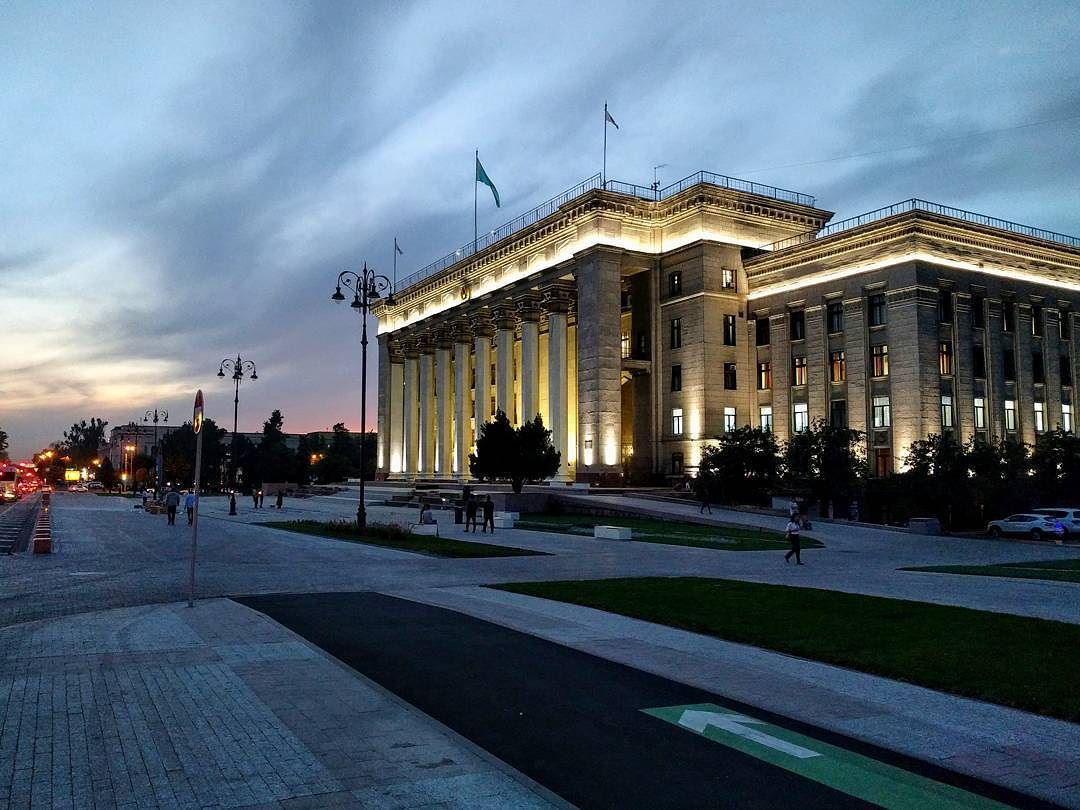
Kazakh-British Technical University, or KBTU is a research and educational institution located in Almaty, Kazakhstan. It was founded in 2001 .
KBTU’s research is focused in the main sectors of the Kazakhstani economy – oil and gas, information technologies, banking and finance, and telecommunications.
KBTU is the first and only Kazakhstani university with internationally accredited IT programs by the U.S. agency, the Accreditation Board for Engineering and Technology (ABET). It is also the first and only Kazakhstani university to receive an international accreditation for its Oil and Gas programs in the UK by the Institution of Marine Engineering, Science and Technology (IMarEST), UK .
Quick Facts:
- The only English-language oriented Technical University in Kazakhstan
- 100% classes are taught in English
- 79 foreign faculty members (30%)
- 1800 Bachelor’s students, 270 Master’s students, 70 Ph.D. students

The idea to establish KBTU belonged to the President of the Republic of Kazakhstan, Nursultan Nazarbayev, who had a number of meetings with official representatives of the United Kingdom of Great Britain and Northern Ireland. This activity resulted in the Memorandum of Understanding signed by the two states in November 2000. British Prime Minister Tony Blair and RK President Nursultan Nazarbayev became patrons of the university. The university was established by Resolution No 1027 of the RK Government dated August 3, 2001, in accordance with the Memorandum of Understanding between the RK Ministry of Education and Science and the British Council. On behalf of Kazakhstan, the founder is the RK Government and the authorized agency the RK Ministry of Education and Science.
KBTU sponsors include: KazMunaiGas, KazTransOil, Kazakhstan Chinese Pipeline, Tengizchevroil, BG Group, BP, HSBC, Agip KCO, Kazakhstan Petroleum Association, Karachaganak Petroleum Operating, Repsol, Shell, Chevron Texaco, Schlumberger, Halliburton, PetroKazakhstan, Lloyd’s Register, Invenys, Statoil, KazEnergy, and Total S.A.

Taking into account the fact that oil and gas derricks are located in fairly remote places of the state, students should be aware that sometimes working conditions will be far from a comfortable office. Although there is an opportunity to work, so to speak, «ashore». If the duties of an employee include repair, adjustment, installation and maintenance of wells, then visits to the field of extraction of natural resources are mandatory. At the same time, after graduation, you can organize the work of teams, monitoring compliance with safety regulations. In this case, the activities of a specialist include work in the office.
The oil and gas industry provides an applied and practical activity of the technologist. But there is also a place for research work. Indeed, to improve profitability, along with environmental safety, new technologies are needed.

